
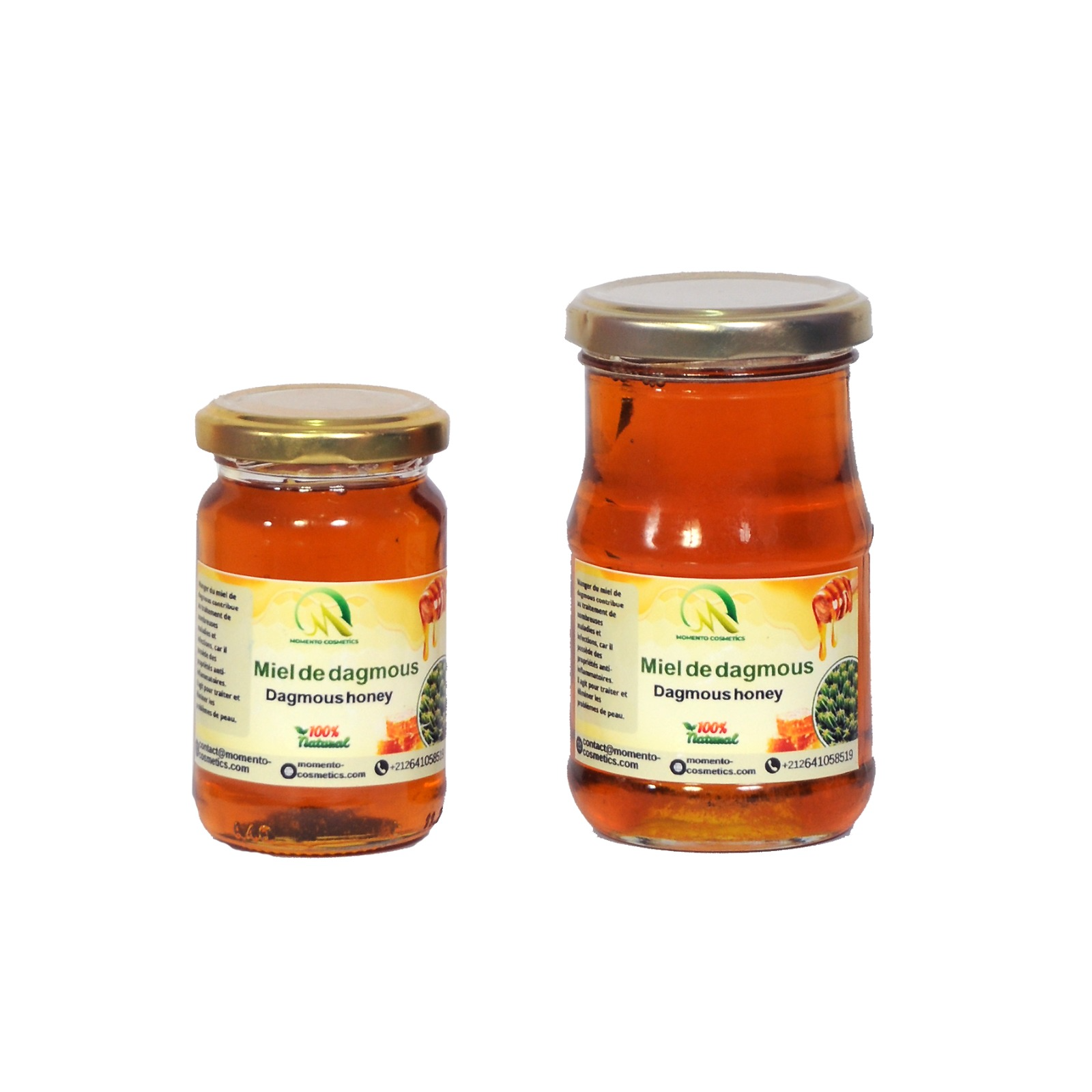

Daghmous Honey: Nature’s Unique Gift from the Euphorbia Plant
Origin and Production: Daghmous honey is a rare and prized variety derived from the Euphorbia plant, a spiky succulent native to the Mediterranean basin, South Africa, and the southern Maghreb. This extraordinary plant, which lacks chlorophyll, is known for producing a distinctive honey.
Characteristics:
- Color: Initially brown-yellow, darkening to black over time
- Taste: Sharp, with a warm sensation in the throat
- Composition: Rich in minerals, vitamins, carbohydrates, and natural sugars
Health Properties:
Daghmous honey offers many health benefits, some of which include:
- Helping treat various diseases and inflammations due to its anti-inflammatory properties.
- Treating and eliminating skin problems.
- Accelerating the healing and closure of wounds.
- Reducing the severity of allergic asthma attacks.
- Alleviating symptoms of colds and flu.
- Enhancing the immune system.
- Reducing the risk of cancer.
- Relieving pain associated with arthritis.
- Aiding in digestion and absorption processes.
Precautions When Consuming Daghmous Honey
It is worth noting that there aren’t enough studies and research on the precautions associated with consuming Daghmous honey, but we will mention the general precautions regarding honey consumption:
- Avoid consuming honey if you have a honey allergy, as reactions can range from mild rashes to life-threatening anaphylactic shock.
- Avoid consuming large quantities of honey if you have diabetes or are trying to lose weight.
- Avoid giving honey to children under one year of age to prevent the risk of food poisoning.
Daghmous honey stands out as a natural remedy with a rich cultural heritage and numerous potential health applications. Its unique origin and properties make it a fascinating subject for both culinary enthusiasts and those interested in traditional medicine.
Reviews
There are no reviews yet.